
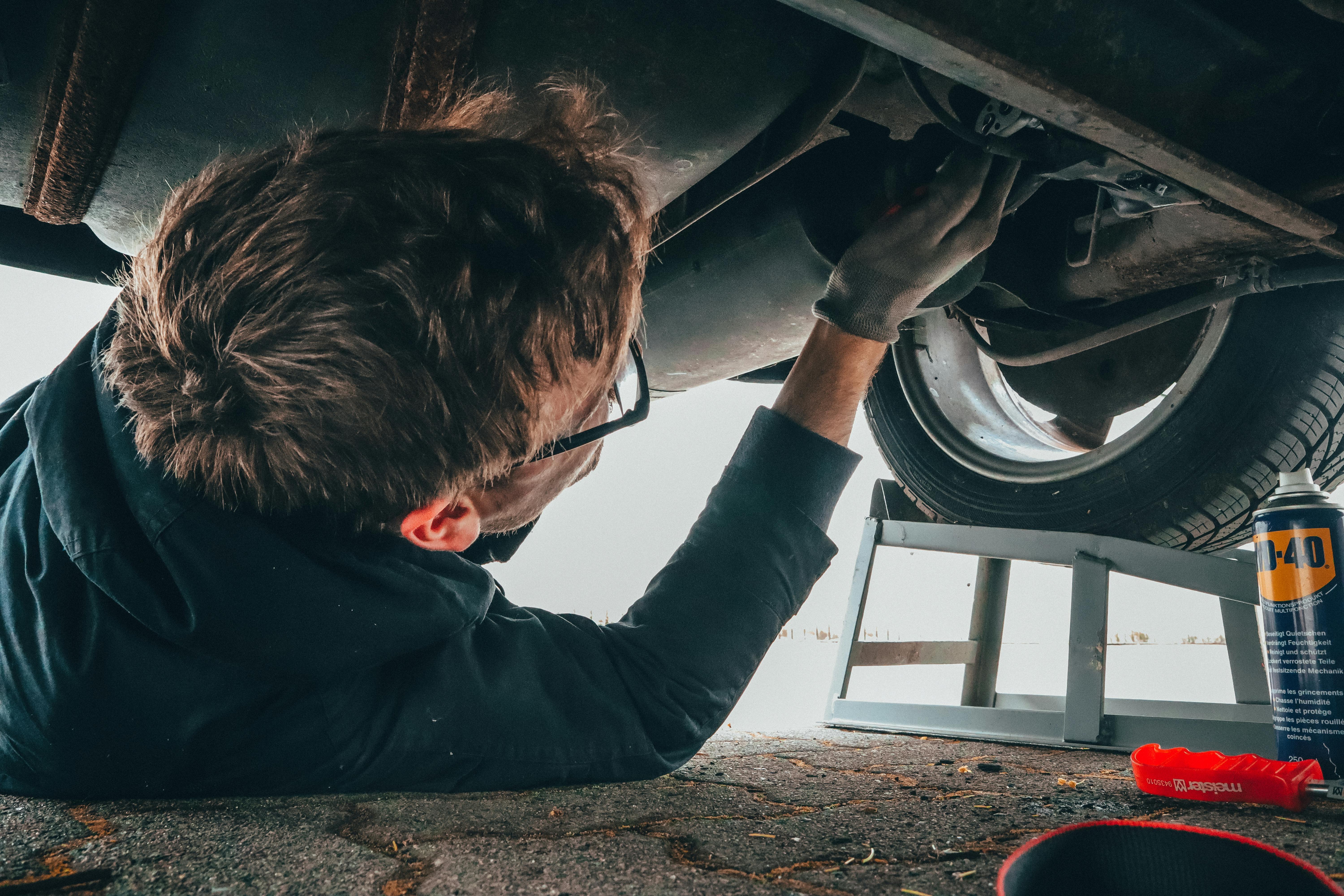
The control arm is a key component found in almost every vehicle. It is so widespread because it ensures safe driving and a pleasant ride. However, a malfunctioning control arm will impact you’re driving, which is why you should learn what they are, and what signs to look out for to diagnose a malfunctioning arm and what you can do about it. Understanding whether your control arm has failed might prevent you from a car accident or costly repair bills.
What Are Control Arms?
A control arm, commonly known as an A-arm, connects the vehicle chassis to the wheel suspension hubs. The visible metallic elements link the car’s body to the wheel assembly.
Control arms are an essential part of a vessel’s suspension system because they enable the tyres to rotate in accordance with the vehicle’s body. They are made up of three major components: a bushing, a body and a ball joint. The control arm body is connected to the chassis by bushings — often rubber bushings —and to the wheel side of the car’s suspension through a ball joint.
By letting the tyres move up and down while staying in contact with the road, you’re in for a smoother drive, including more precise and responsive wheel movements. Control arms also minimise steering resistance and distortion.
Cars often feature two to four control arms based on the vehicle’s structure. However, most current cars only have control arms in the front wheel suspension. Control arms for the back wheel suspension are standard in larger or heavier-duty vehicles, such as trucks.
A properly functioning control arm and suspension system keeps your tyres in position when you hit a rock or pothole in the road, which is critical for your safety. However, if your steering wheel vibrates or seems challenging to operate, or you hear loud slamming or rattling noises when passing over bumps, it might indicate that your control arm assembly needs to be replaced.
What Are Adjustable Control Arms?
Adjustable control arms are a subset of control arms. You can find them on many vehicles too. For instance, the Toyota Hilux has adjustable upper control arms. But you might be wondering what exactly Toyota Hilux and other models’ adjustable upper control arms do.
These adjustable upper control arms are engineered to improve off-road capabilities and re-establish wheel alignment kinematics after installing a lift kit on the automobile. The OE suspension elements are stressed when lift kits are installed. When going over uneven terrain, wheel movement is affected, and lack of flexibility can lead to wheels lifting off the ground. Replacing the control arms with adjustable versions returns that lost flexibility, enabling improved off-road efficiency.
Adjustable control arms are also utilized to enhance wheel alignment by enabling camber and caster adjustment. This means that excessive wear and strain on suspension parts, as well as uneven tire wear, are a thing of the past!
Are They Worth the Cost?
Clearly, control arms, adjustable or not, are a key part of any car’s suspension system. They allow for a smooth and comfortable driving experience, as well as a safe one! But what can you do about getting the most out of them and ensuring your car has functioning control arms?
What Are the Signs My Control Arms Are Failing?
Control arms are a vital component of your vehicle because they allow the wheels to glide up and down while prohibiting a forward-backward motion. However, the ball joints or bushings may weaken, shatter or wear out over time, contributing to poor driving. There are however various indicators that suggest your vehicle’s control arms are no longer in excellent working order. When you spot them, start thinking about replacing the control arms before things get worse. Here are four signs that your control arms need to be changed.
The Steering Wheel Is Moving Against You
When you feel your car tugging to the right or left while driving down the road, it is most likely due to a problem with the wheel alignment, which you must rectify. If you restore the alignment but still sense the car dragging to one side or the other, the problem might be with your control arms. Exceedingly worn-out bushings or ball joints can generate shaky control arms, causing them to swing freely rather than stay firmly in place. As a result, it will be much harder to keep your car going in a straight line.
If ignored, such a small component of your car can lead to major problems. According to research, car mechanical breakdowns are one of the leading causes of traffic accidents. If you detect a swaying steering wheel, take your car to your technician for an assessment. If the erratic motion is caused by broken control arms, you should replace them as soon as possible.
You Hear Thudding Sounds
Thudding sounds can be caused by significant instability of the ball joint or bushing, which leads them to bang against one another, particularly while driving over steep, rugged or irregular terrain. As the ball joints and bushings degrade, the banging noise will intensify until they fail. If you hear such loud sounds, you should repair the control arms as soon as possible. Acting quickly is important as this issue can lead to other problems with your car, making the repair several times more costly. Even if the price isn’t a problem, remember that damaged auto parts can be dangerous.
Your Steering Wheel Is Vibrating
You will typically feel it in your hands when there is a problem with your vehicle’s steering wheel mechanism. It may feel unstable or floppy, or you may notice vibrations. Control arms are a component of the wheel system, and if they are damaged, you will likely detect steering wheel vibrations. As the car accelerates, the vibrations become more intense. If they get aggressive, you may put your life in jeopardy, as accidents may occur when you have difficulty using your steering wheel. Therefore, if you notice your steering wheel vibrating, slow down for the remainder of the trip and then get your control arms replaced as soon as feasible.
You Have Issues Braking
Although control arms are not directly part of the braking system, any inconsistency in your vehicle’s suspension and steering components might create braking issues. One symptom is that when you brake sharply, your car’s front sections may continue to move back and forth until the vehicle comes to a full halt. This is not always the result of broken control arms but seeing a mechanic for confirmation will keep you informed of the actual situation. If the culprit is the control arms, it’s time to repair them, particularly if other previously indicated signs accompany this symptom.
What Can You Do for Failing Control Arms?
Assess Your Ball Joints & Bushings
If you have one or more of the abovementioned symptoms, you should first inspect the ball joint and bushings. These parts on the control arm are frequently the offender since that arm connects the wheel assembly and chassis and carries the vehicle’s weight. When filth or debris gets into the ball joint, the metal-to-metal (or sometimes metal-to-plastic) edges grind against one another and erode, leaving you with a loosened ball joint.
There are numerous ways to test ball joints to detect a problem. Most of them involve simply moving the ball joint to test for looseness. The ball stud or bearing surface has worn down if the ball joint has any vertical play. This indicates that you require a replacement because the control arm’s attachment to the wheel assembly is slack, allowing your alignment to change.
Rugged terrain, hard-driving, and environmental conditions can hasten the deterioration of the control arm bushings. As a result, they may need to be replaced. Bushings are made of rubber and maintain the arm balance while reducing road vibrations, making your ride more pleasant; but they will wear out. Bushings are simple to assess visually. Just look for any drooping, hollowing or ripping.
Take Preventive Measures
Your control arms and their components just do not last indefinitely. If you own a car for a long enough period, you will most likely have to change the lower control arm ball joints and bushings. However, you can take action to ensure the longevity of the ball joints to get better value for money.
Loose ball joints are commonly caused by ripped or absent dust boots, which enable contaminants to enter the joint, or by cheap materials, such as a plastic bearing surface, which wears out prematurely. If you discover your dust boots are showing signs of wear, changing them with some other rubber boots or a more robust polyurethane boot might extend the life of the ball joint cheaply.
If your ball joint has a greased zerk fitting, you can inject new grease into it with every other oil change as part of your routine servicing. This can also be done if you’ve gone off-road in dirt or water for an extended length of time. Remember though, that rubber bushings will ultimately wear out and should be inspected regularly to check for degradation or gaps.
Where Can You Get New Control Arms?
Control arms aren’t the most intricate or intriguing parts of a vehicle, but they’re crucial to its performance. They are designed to handle the driver’s steering inputs and road surface irregularities. Because of their function, they are critical to a vehicle’s ride, stability, and driving dynamics, so it’s essential to take care of them and replace them when they are no longer in good condition.
